Getting started
Sign in with a magic link (or the local sign-in flow on a development machine). Credits buy access to a world — they never change how aircraft, routes, or rivals behave.
Join an open world, then found your airline. Your base airport matters: in 1935, mail pays, and a well-placed hub is your first advantage.
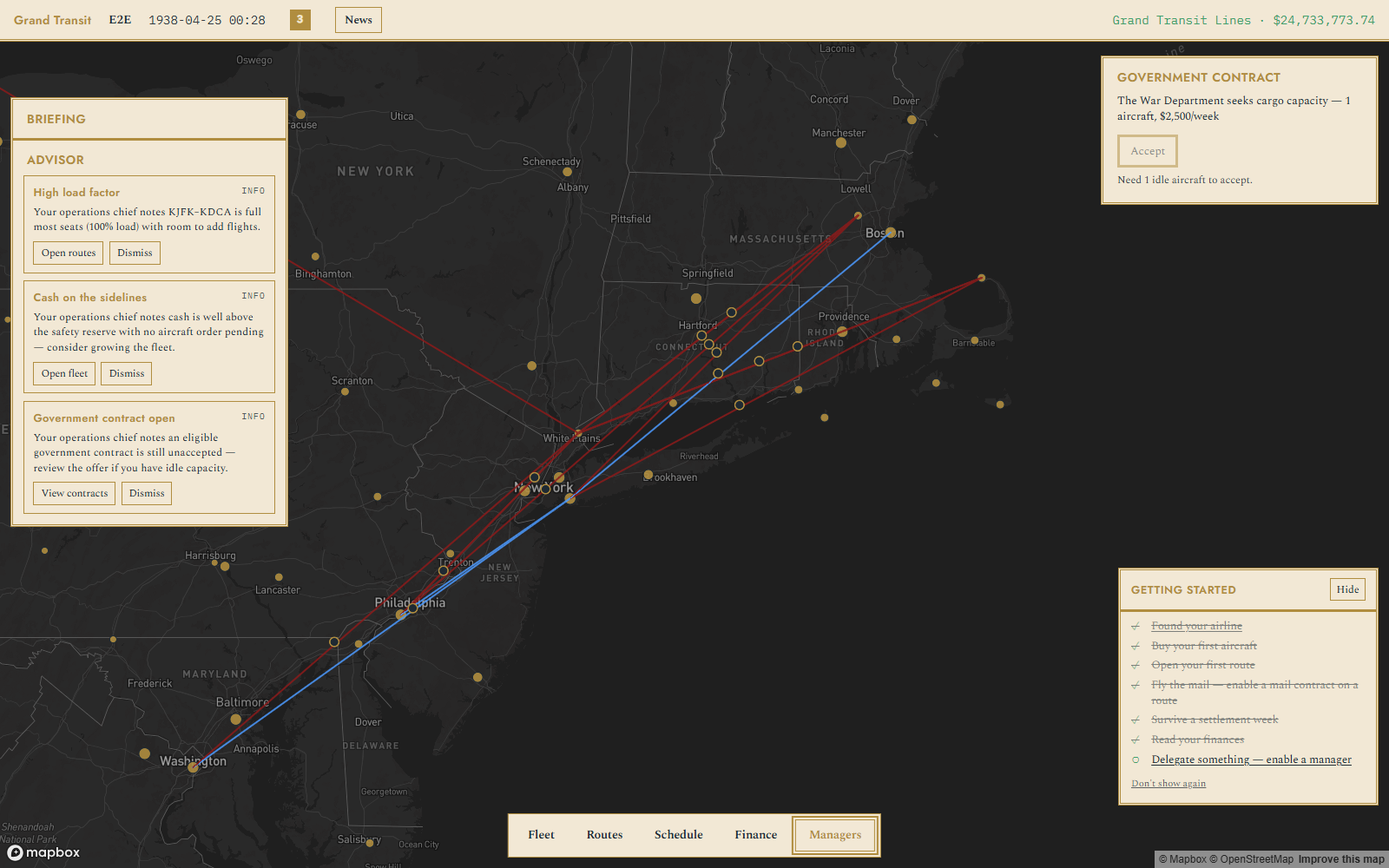
When the world shell loads, the map is home. Open panels from the dock when you need fleet, routes, schedule, finance, or managers.
Your fleet
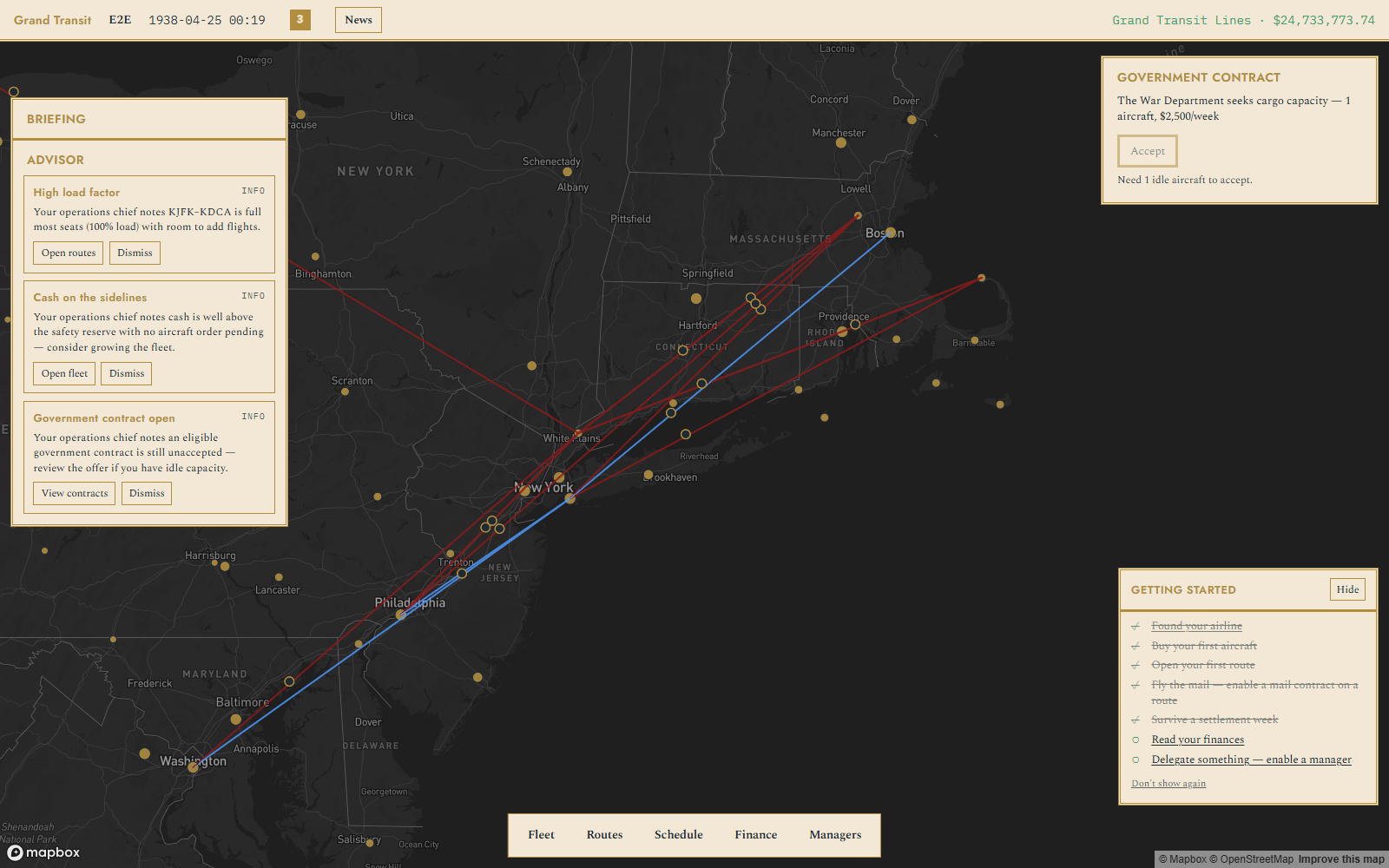
Buy new airframes from the manufacturer market when models are available for the current game year. Used aircraft appear on a separate list with age and remaining life already on the clock.
Availability windows mean the DC-3 does not last forever as the only option — newer types open as decades pass. Retire airframes you no longer need so cash and hangar space return to the airline.
Each unit needs a registration. Idle aircraft can be assigned when you open a route.
Routes & rights
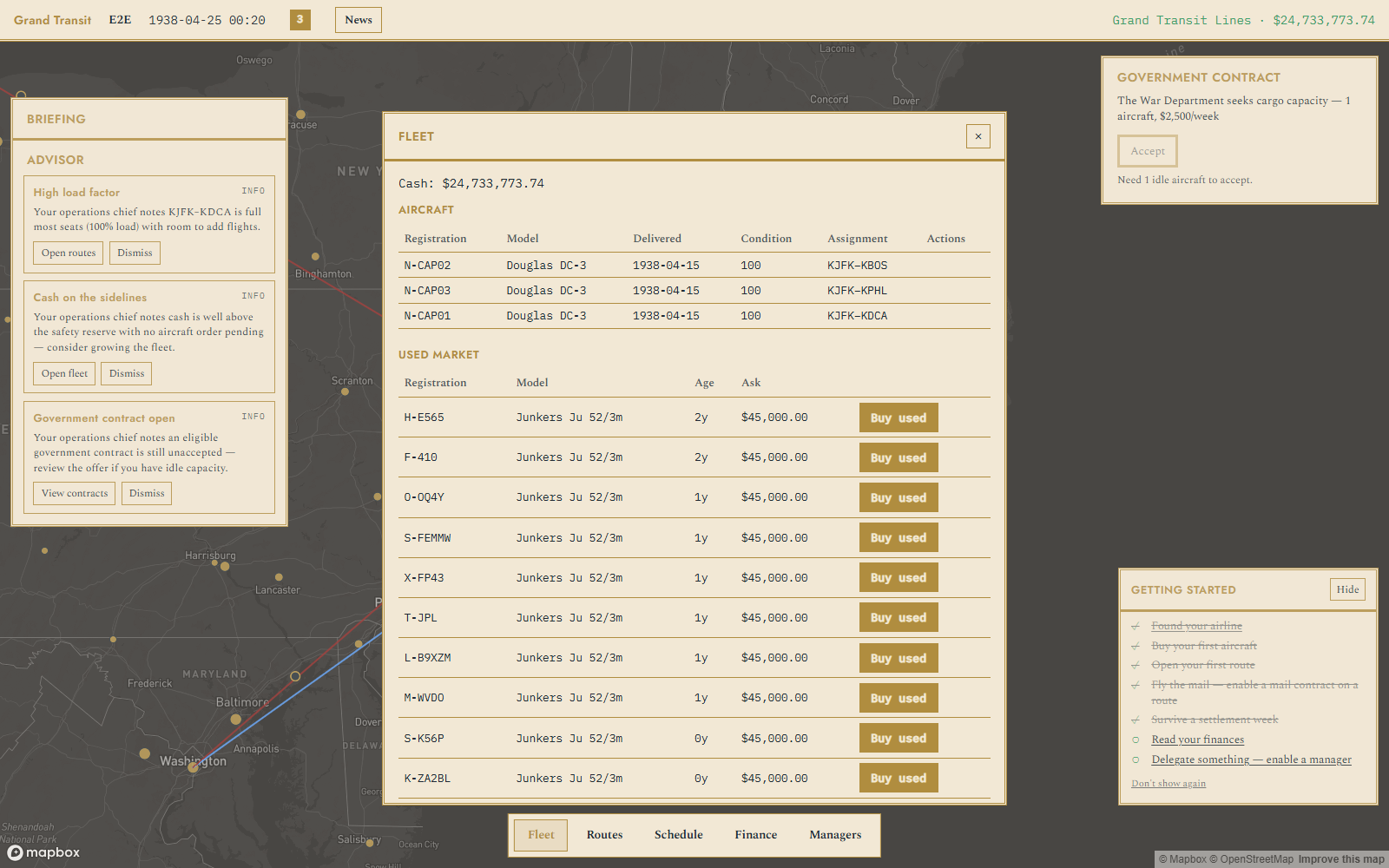
Open a route by choosing origin and destination, weekly frequency, fare, and an aircraft. Distances show in nautical miles and aircraft cruise in knots. Mail can ride along when the corridor allows it.
Traffic rights are the legal permission to fly. In plain words: bilateral deals open foreign cities; cabotage rules limit flying purely domestic legs inside another country.
In the regulated era, fares sit in a band around a reference price. Push too low or too high and the command is rejected — adjust and try again.
Mail & government contracts
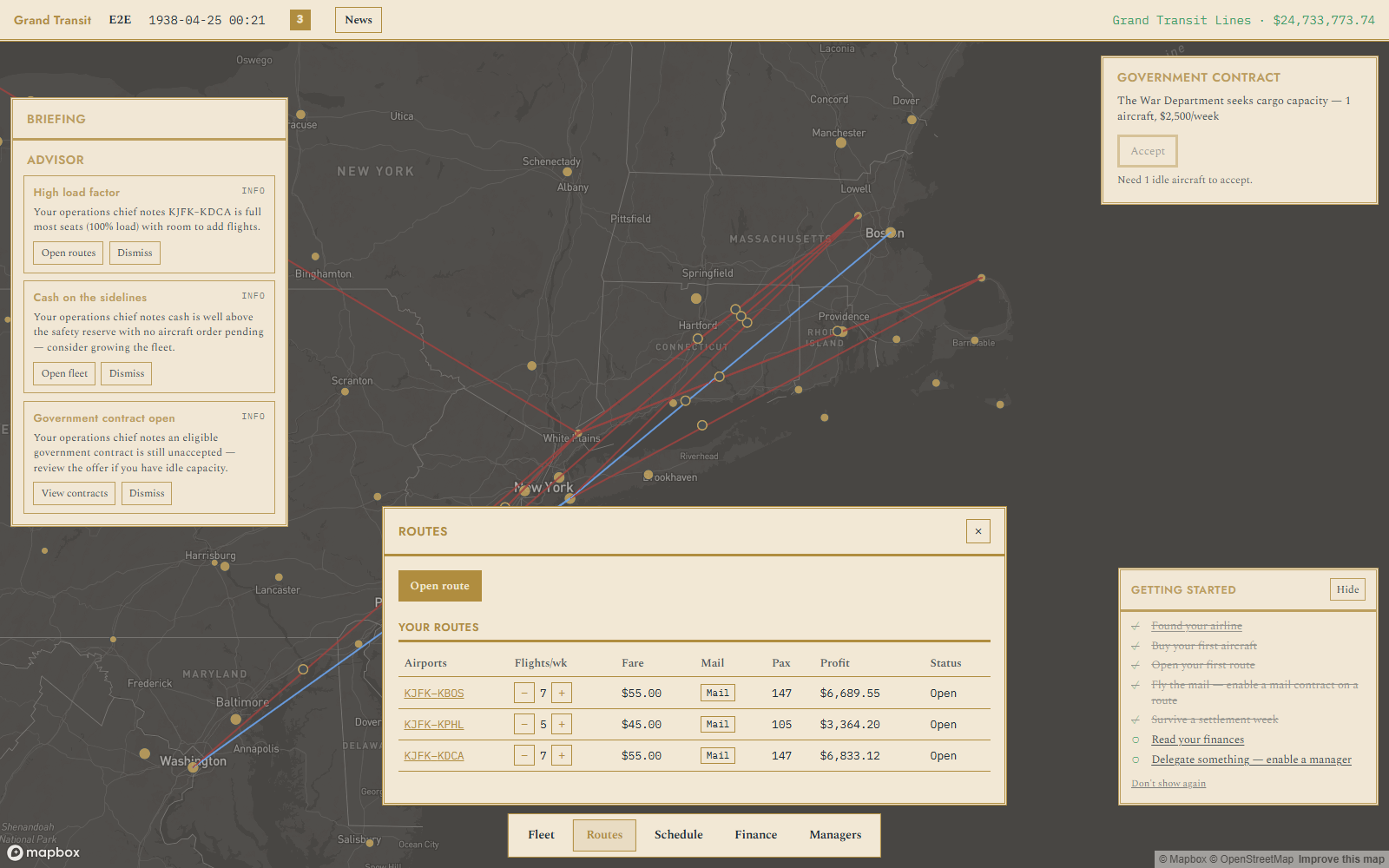
In 1935 the mail is often the difference between a thin week and a solvent one. Turn mail on when the route form offers it and the advisor will stop reminding you.
Government contracts appear as offers with capacity, revenue, and duration. Accept only what your fleet can cover — over-committing leaves the contract under-served.
Wartime and emergency programmes can reprice cargo and mail; watch the news feed when the world turns.
Schedules & money
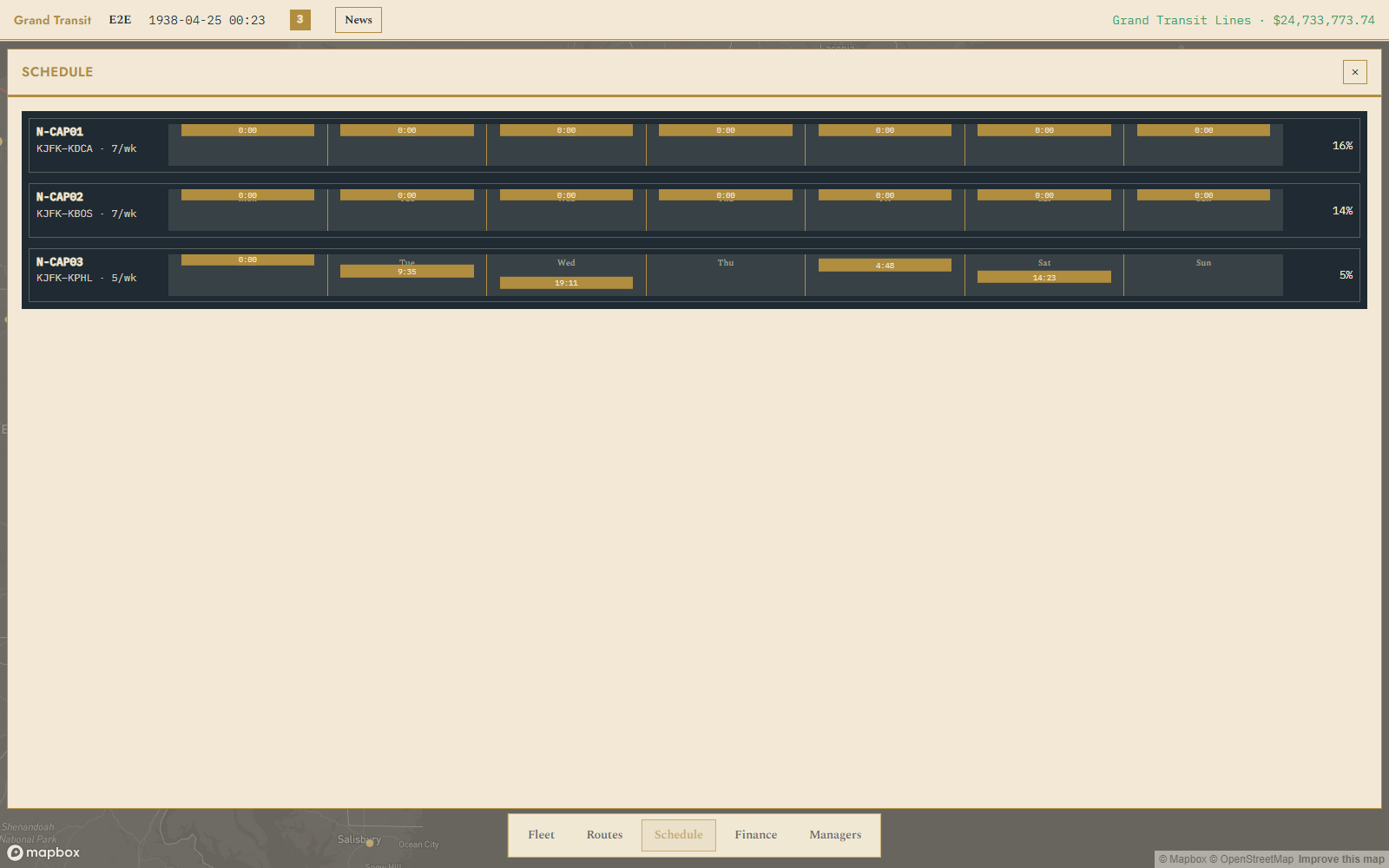
Frequency is flights per week on a route. Higher frequency needs aircraft time and raises costs; load factor is how full those seats were after settlement.
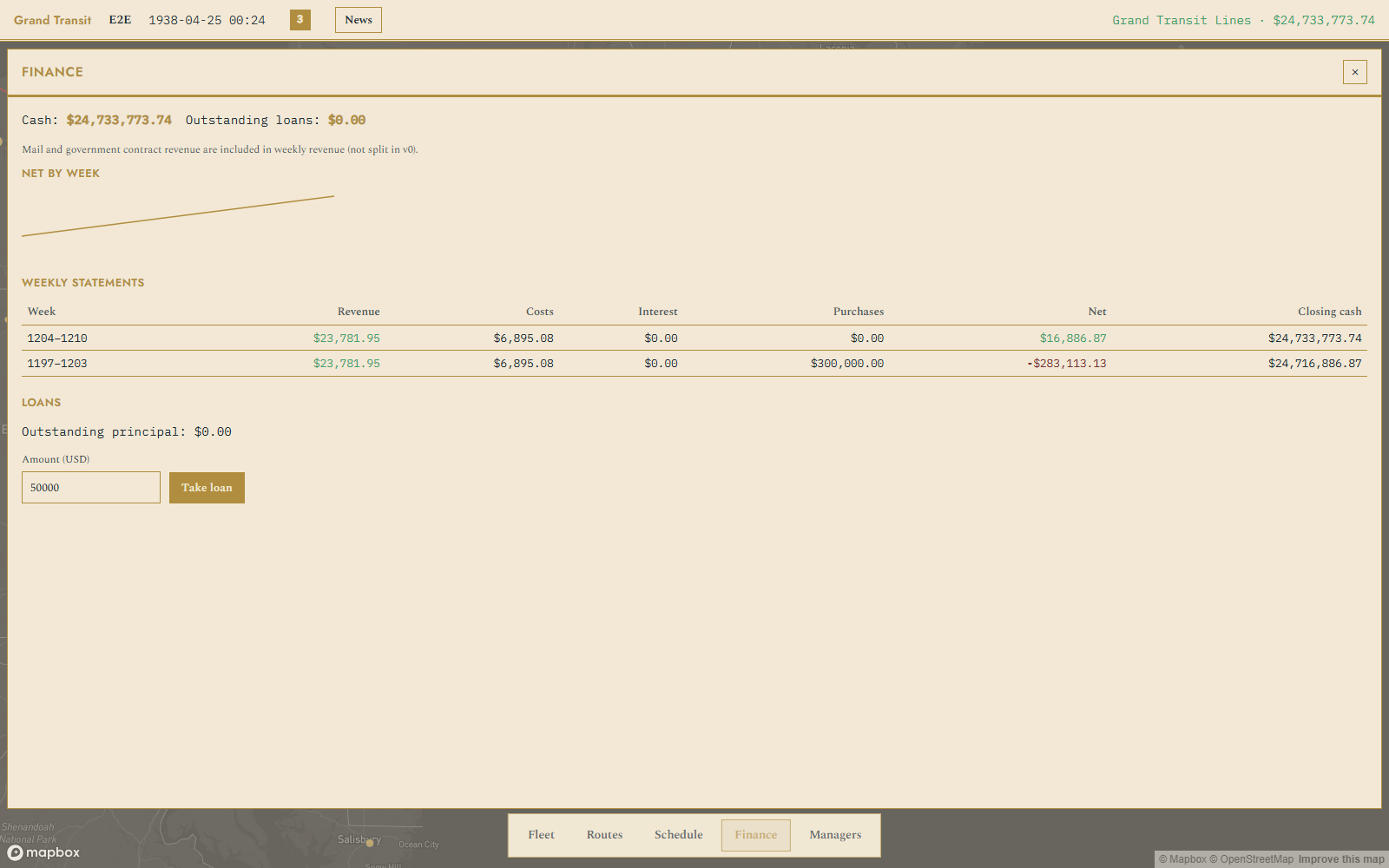
The finance panel rolls up revenue, costs, and cash. Loans are available when you need working capital — read the terms before you sign.
The schedule board shows the week’s pattern so you can see conflicts before the week settles.
Delegation
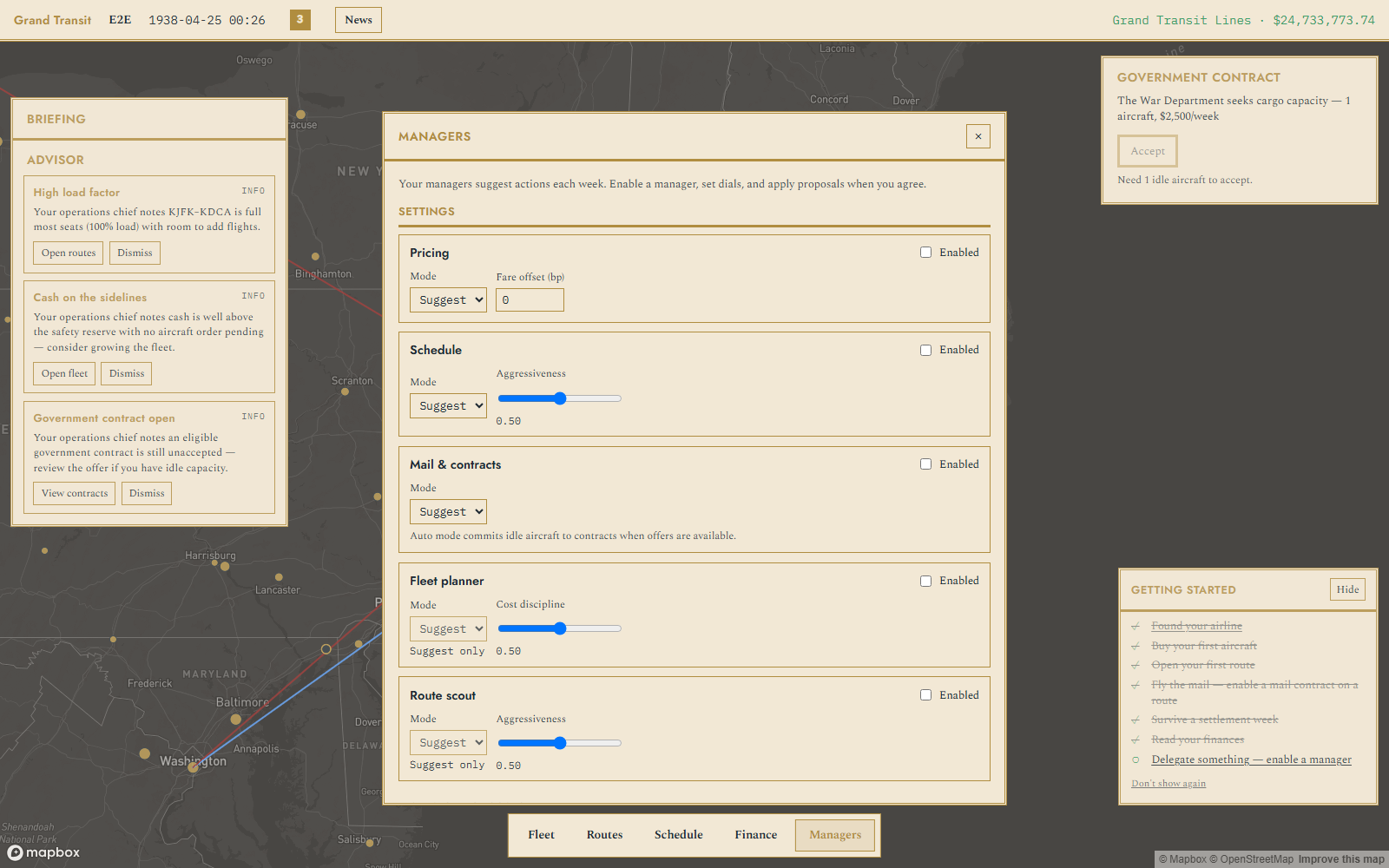
Five managers can suggest or auto-apply changes in their domains. Start with suggest until you trust their judgment on your airline.
Read each proposal’s reason before you accept. Auto mode applies approved patterns without asking — use it when the airline is stable.
The managers panel is the control room for this layer; the change feed shows what they did and why.
The living world
AI rival airlines open routes and buy aircraft under the same rules you do. Rail and sea compete for the same passengers on overlapping corridors.
World events and the news feed mark eras: regulation, war, jets, deregulation. Your office chrome follows the decade — the same ops room, redecorated.
Nothing you buy with credits changes rival strength or yields. Credits only gate which worlds you may join.
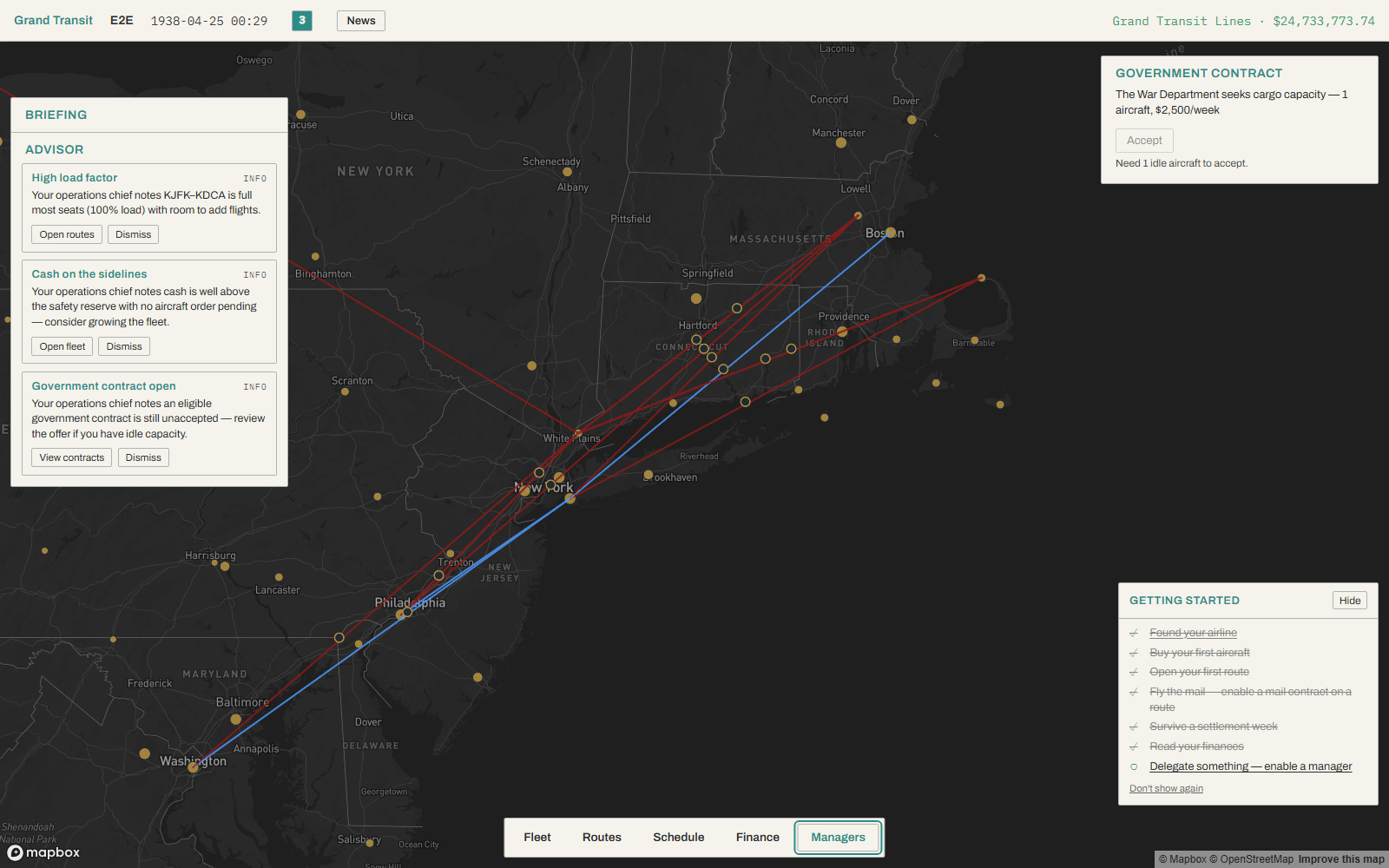
Onboarding & advisors
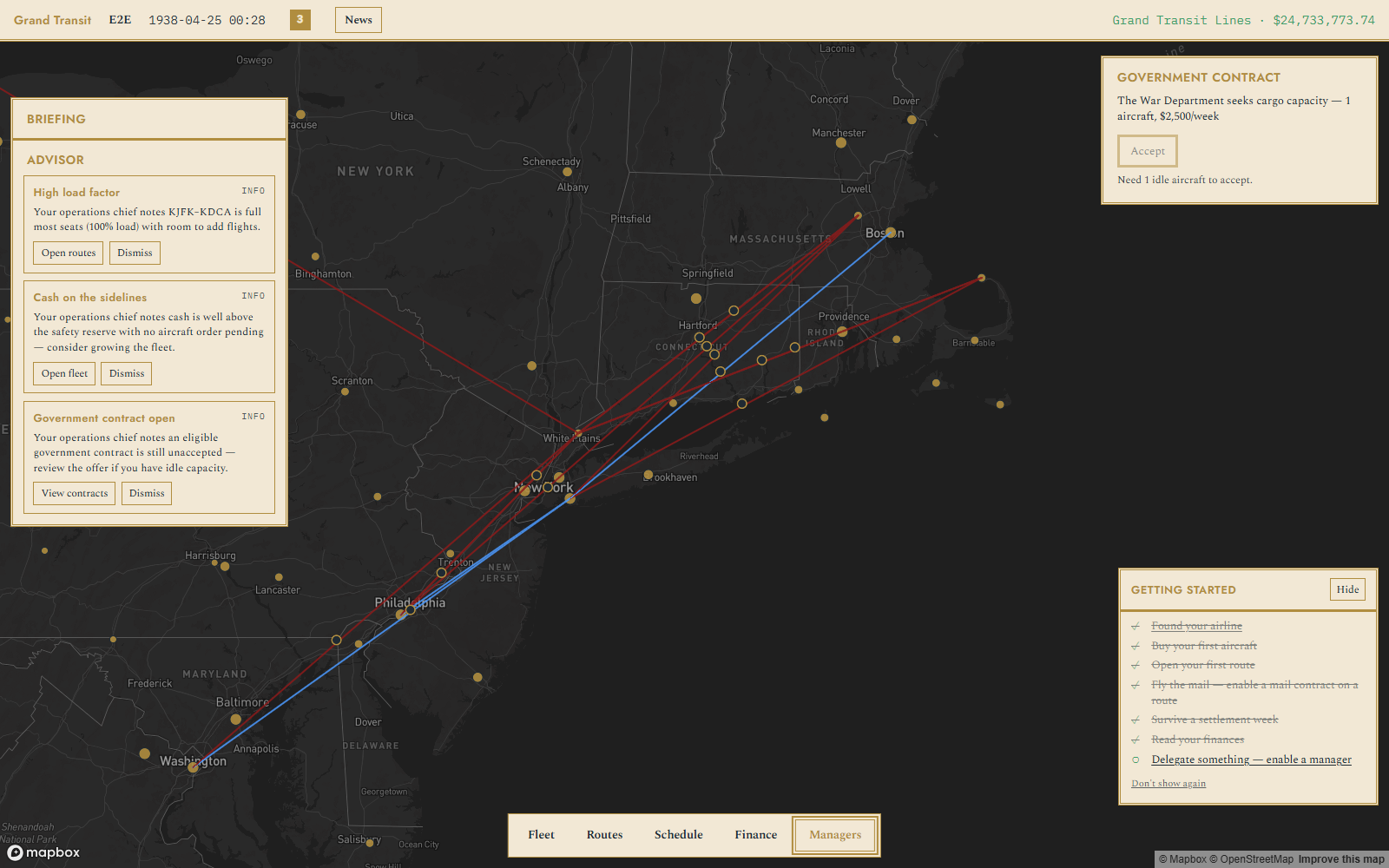
The checklist walks founding, first aircraft, first route, and a look at finance and managers. Dismiss it when you are comfortable.
Advisor tips are short, numbered, and actionable. They deep-link into the right panel when you want to act.
Tips clear when the underlying condition is fixed — turn mail on, hire a manager, or open the panel they asked for.